
Poor cellular coverage is no longer just an inconvenience, it has become a critical safety, security, and liability issue for modern buildings.
Why Indoor Connectivity Has Become a Safety and Liability Issue?
For years, poor cellular coverage inside buildings was treated as an inconvenience. Dropped calls in elevators, weak signal in stairwells, and dead zones in parking garages were accepted as part of the indoor experience. But as buildings become more connected, more digital, and more dependent on mobile communication, weak indoor coverage has evolved into something far more serious: a security, operational, and liability risk.
The Growing Dependence on Indoor Wireless Connectivity
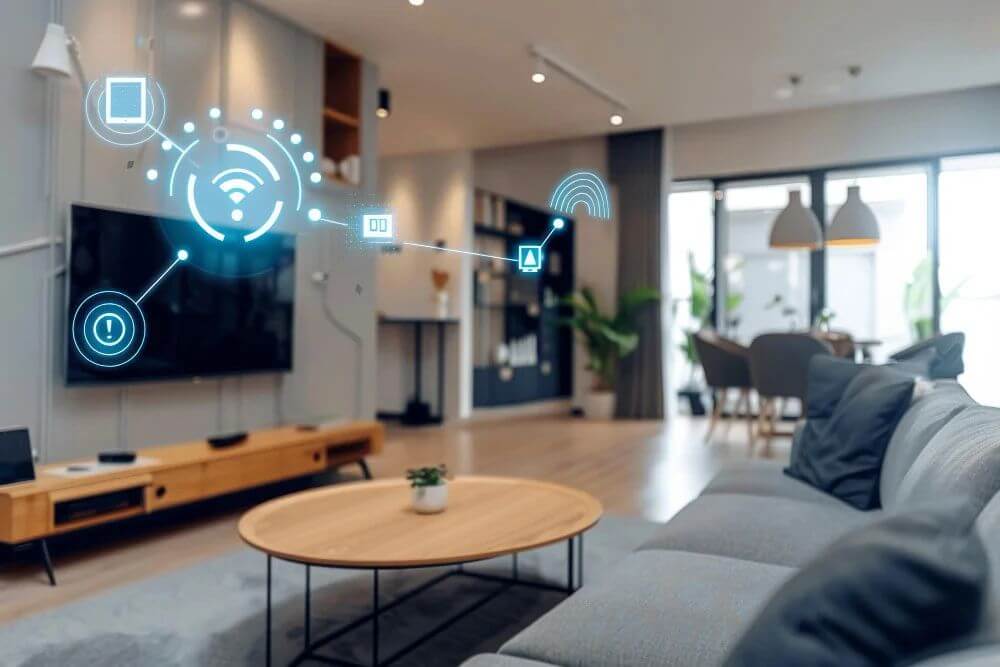
Modern properties rely heavily on wireless infrastructure. Office buildings depend on mobile collaboration and cloud applications. Residential towers increasingly support app-based access control, connected amenities, and smart devices. Hospitality properties rely on digital guest experiences, mobile communication, and IoT-enabled operations. Across all sectors, the assumption is the same: connectivity should work everywhere.
The problem is that many buildings were never designed for today’s wireless demands.
Modern construction materials such as low-E glass, reinforced concrete, steel, and energy-efficient insulation significantly weaken RF signals. At the same time, 5G networks, particularly mid-band and higher-frequency deployments, do not penetrate buildings as effectively as earlier generations of wireless technology. The result is a growing gap between how buildings are built and how wireless networks actually perform inside them.
Why Poor Indoor Cellular Coverage Becomes Critical During Emergencies
“Poor indoor cellular coverage becomes critical during emergencies.”
Dead zones in stairwells, basements, elevators, and interior corridors can prevent occupants from reaching emergency services or receiving timely information during fires, medical events, or security incidents. First responders also depend on uninterrupted communication to coordinate operations inside large or complex structures. When signal quality deteriorates, response times slow down precisely when every second matters most.
A properly engineered Cellular DAS provides an important advantage that is often overlooked: more accurate emergency caller location. Because DAS infrastructure incorporates GPS-based network positioning throughout the building, emergency services are better able to identify where a 911 call originates, especially across large campuses, hospitals, hotels, universities, or multi-building developments. Wi-Fi calling, while convenient, often cannot provide the same level of reliable indoor location accuracy. In emergency situations, uncertainty about the caller’s location can create dangerous delays.
The Impact of Weak Connectivity on Building Security Systems
Poor connectivity also affects the reliability of modern security infrastructure. Surveillance systems, smart sensors, remote monitoring platforms, access control systems, and IoT devices increasingly depend on both Wi-Fi and cellular redundancy. If cellular pathways fail, buildings can lose visibility into critical systems or fail to transmit alerts during incidents. In hospitality and residential environments, this creates not only operational risk but also reputational exposure.
The Financial and Operational Risks of Poor Cellular Coverage
The financial implications are growing as well. Tenants and guests now view connectivity as part of the overall property experience. Poor wireless performance impacts tenant satisfaction, lease renewals, employee productivity, and guest reviews. In office environments, dropped calls and unreliable mobile service create constant workflow interruptions. In residential buildings, complaints about weak signal in units, elevators, or garages increasingly influence retention. In hospitality, connectivity failures directly affect guest trust and brand perception.
At the same time, regulatory requirements around public safety communications continue to expand. Many jurisdictions now require ERRCS and in-building radio coverage testing to ensure first responders can communicate throughout a property. Buildings that fail compliance testing may face delayed occupancy approvals, expensive retrofits, or ongoing liability exposure.
Why Connectivity Planning Should Start During Building Design
One of the biggest mistakes developers make is treating connectivity as a post-construction issue. Retrofitting DAS or ERRCS systems after a building is complete is often significantly more disruptive and expensive than planning for wireless infrastructure during the design phase. Ceiling modifications, tenant disruption, pathway limitations, and architectural compromises can dramatically increase project costs later.
The smarter approach is to integrate connectivity planning early. That means conducting signal assessments before construction is finalized, allocating pathways and equipment space, supporting multiple carriers, and designing with long-term scalability in mind. Wireless infrastructure should be considered alongside other core building systems, not after occupancy problems begin to surface.
Indoor Connectivity Is Now Part of Building Infrastructure
What’s becoming increasingly clear is that connectivity is no longer simply an IT concern. It has become part of the building’s operational foundation, influencing safety, compliance, tenant experience, and long-term asset value.
Poor cellular coverage is no longer measured only in dropped calls.
It is measured in delayed emergency response, operational vulnerability, compliance risk, tenant dissatisfaction, and preventable exposure. As buildings become smarter and more connected, the cost of ignoring indoor wireless infrastructure continues to rise.