

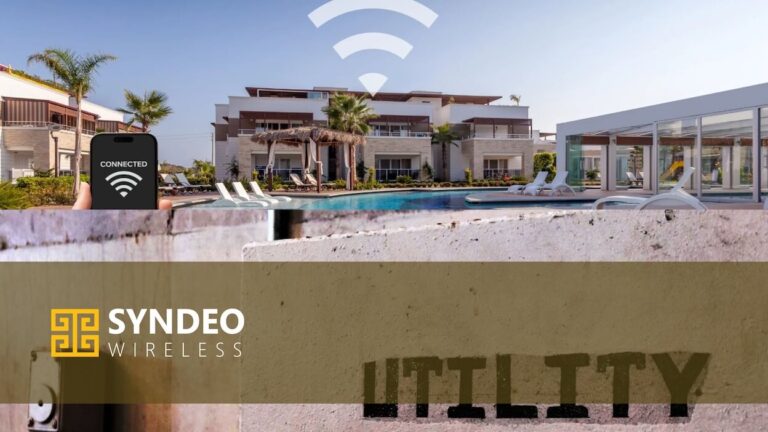
Why wireless infrastructure now belongs in the same category as power, water, and climate control.
Every hotel operator understands the first three utilities without having to think about them. Power, water, and HVAC are planned, budgeted, and maintained with the seriousness of systems the property cannot function without. Nobody debates whether a hotel needs a backup generator or asks if climate control is really necessary in the month of July. Those questions were settled decades ago.
Wireless connectivity has not historically been planned with that same seriousness, and that gap is now showing up on the balance sheet. It’s time to call it what it has become: the fourth utility. Not an amenity guests appreciate when it’s there, not an IT budget line to trim in a soft year, but core infrastructure a modern hotel cannot operate without.
A Utility Guests Never Notice, Until It Fails
Guests don’t compliment a hotel for having reliable electricity. They don’t leave a five-star review because the water pressure was consistent. Utilities work invisibly, and the only time anyone notices them is when they stop working.

Connectivity has quietly joined that category. Property management, point-of-sale, mobile check-in, digital room keys, HVAC controls, video surveillance, staff communications, and emergency systems all run on the same wireless backbone. These are not separate technology decisions bolted onto the guest experience. They are one interdependent system, and when the network underperforms, it doesn’t inconvenience a single department. It degrades the entire operation at once, the same way a power outage doesn’t just kill the lights, it takes down the elevators, the POS terminals, and the door locks with it.
Why Ownership Stops Working Once Something Becomes a Utility
No hotel owner buys a power plant to keep the lights on. They consume electricity as a managed utility because that model matches how the asset actually behaves: it needs continuous monitoring, it needs to scale with demand, and its underlying technology evolves faster than any single capital purchase can keep up with.
Wireless infrastructure behaves the same way, yet most properties still buy it like it’s a one-time construction line item, a fixed system installed once and left to age until something visibly breaks. That mismatch is why Connectivity-as-a-Service (CaaS) has become the rational model for treating connectivity like the utility it is:
- No large upfront capital outlay for design, equipment, and installation
- A provider, not the property, carrying the risk of technology obsolescence
- Multi-carrier, neutral-host coverage instead of a single-carrier bet
- Continuous, proactively monitored maintenance instead of a reactive ticket queue
- ERRCS compliance and documentation built into the service rather than owned by hotel staff
- Capacity that scales with renovations or demand instead of a disruptive retrofit
- A predictable monthly operating cost instead of a capital spike every seven to ten years
That’s what consuming a utility actually looks like. It’s also, not coincidentally, exactly how forward-thinking properties are now approaching wireless.
The Physics Working Against Properties That Wait

The global rollout of 5G has made the case for treating connectivity as a utility even harder to ignore. Mid-band and high-band frequencies deliver genuine gains in speed and capacity, but reinforced concrete, steel structural systems, and low-emissivity glass in modern hotel construction can attenuate those signals by up to 95% before they ever reach a guestroom. At the same time, over 80% of mobile data traffic is now consumed indoors, inside the exact spaces that outdoor carrier networks were never designed to reach.
Carriers keep investing in denser outdoor infrastructure. That investment isn’t closing the indoor gap, it’s widening it. The responsibility for what happens once a signal reaches the building’s exterior wall has shifted decisively to the property owner, whether operators have budgeted for that responsibility or not.
The Cost of Treating a Utility Like an Amenity
When power fails, an owner knows immediately what it’s costing them. When connectivity fails, the cost hides inside numbers nobody connects back to the network: a guest review calling the property “dated,” a group booking that quietly doesn’t renew after a planner’s site visit exposed dead zones in the ballroom, housekeeping losing minutes per shift to a corridor with no signal.
The most serious version of that hidden cost is public safety. Approximately 60% of 911 calls originate from inside buildings, and in properties with coverage gaps in stairwells, elevators, or below-grade areas, accurate emergency caller location is compromised, a risk that Wi-Fi calling cannot reliably solve. A properly engineered Cellular DAS with GPS-based positioning can. In most U.S. jurisdictions, ERRCS compliance isn’t a nice-to-have. It’s code, and treating it as an afterthought carries both regulatory and reputational exposure.
The hotels that will lead the next decade have already made the mental shift: connectivity sits alongside power, water, and climate control as infrastructure the property cannot run without, and it deserves the same planning discipline. The ones still treating it as an amenity aren’t just behind on technology. They’re carrying a liability that compounds every year they wait.
Continue the Conversation
If you’re exploring how connectivity is reshaping hospitality, we’ve developed a comprehensive research study that examines why the network is becoming the foundation of the modern hotel operating model.
Download our complimentary white paper:
The Hotel Operating System Is the Network: Why Connectivity Has Become Hospitality’s Most Important Infrastructure
Inside, you’ll discover:
- Why connectivity is becoming core infrastructure—not just an IT expense
- How leading hotels are using DAS, managed Wi-Fi, IoT, and private wireless to improve operations
- The financial case for Connectivity-as-a-Service
- Practical strategies for future-proofing hospitality properties