
The business case for reliable connectivity in meetings, conventions, and corporate events
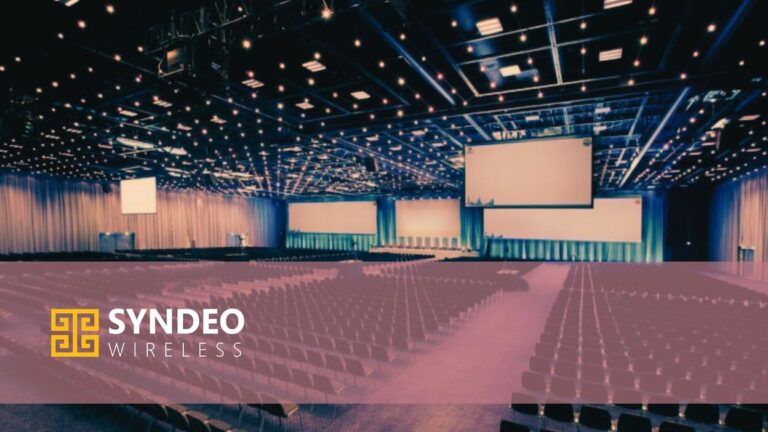
There was a time when conference centers and event venues were judged primarily by their location, size, amenities, and hospitality. Organizers compared ballroom capacities, breakout room configurations, catering options, and nearby accommodations.
Connectivity rarely made the shortlist of decision-making criteria because it wasn’t central to the event experience.
That world no longer exists.
Today, connectivity has become one of the most important pieces of infrastructure inside any event venue. Long before attendees walk through the doors, organizers are already planning mobile applications, livestreams, exhibitor demonstrations, hybrid participation, digital registration systems, networking platforms, real-time polling, and cloud-based collaboration tools.
Every one of these experiences depends on reliable wireless connectivity. When the network performs well, it becomes invisible. When it doesn’t, it becomes an event.
What makes conference centers and event spaces uniquely challenging is the concentration of demand. Unlike an office building where users are distributed throughout the day, events create massive spikes in wireless activity.
Thousands of attendees may simultaneously connect to networks, upload content, access event applications, participate in interactive sessions, or stream presentations.
A keynote presentation can trigger more wireless traffic in an hour than some commercial buildings generate in an entire day.
The reality is that most outdoor cellular networks were never designed to handle that level of concentrated indoor demand. While carriers continue investing billions in nationwide network upgrades, modern buildings often work against those investments. Steel structures, concrete walls, energy-efficient glass, exhibition halls, and large interior spaces can weaken or block signals before they ever reach attendees. As a result, a venue located in the middle of a major metropolitan area can still suffer from poor indoor cellular performance.
For event organizers, these failures have tangible consequences. An exhibitor whose cloud-based demonstration crashes because of poor connectivity doesn’t blame the cellular carrier. An attendee unable to access an event app during a session doesn’t distinguish between Wi-Fi issues and cellular limitations. Their perception is simple: the venue failed to deliver the experience that was promised.
This shift has fundamentally changed how venues compete.
Increasingly, connectivity is becoming part of the venue selection process itself. Corporate event planners, convention organizers, and trade show operators are evaluating venues not only on physical characteristics but also on their ability to support digital experiences. As hybrid events become standard and attendee expectations continue to rise, connectivity is moving from an operational consideration to a strategic differentiator.
The venues that understand this are treating wireless infrastructure as a business asset rather than a technology expense. They recognize that reliable connectivity contributes directly to attendee satisfaction, exhibitor success, organizer confidence, and ultimately, repeat bookings. In many cases, a strong connectivity reputation can become as valuable as location or meeting space capacity.

The implications extend beyond attendee experience. Modern event venues operate increasingly sophisticated technology ecosystems that rely on constant connectivity. Security systems, access control platforms, digital signage, point-of-sale systems, staff communications, building automation, and operational analytics all depend on robust wireless infrastructure. As venues become smarter and more connected, the underlying network becomes a critical operational foundation rather than a convenience.
Dedicated indoor wireless infrastructure helps address these challenges by providing venues with greater control over performance and user experience. Rather than relying solely on outdoor cellular signals, venues can create environments specifically engineered for high-density usage and multiple carrier support.
The benefits extend across the entire event ecosystem:
- Improved attendee experience and satisfaction
- Better support for hybrid and livestreamed events
- Reliable connectivity for exhibitors and sponsors
- Stronger operational communications for venue staff
- Enhanced support for mobile event applications
- Improved public safety and emergency communications
- Increased competitiveness when attracting large events
Safety is another dimension that is often overlooked until an emergency occurs. Large convention centers, exhibition halls, arenas, and multi-building event campuses create complex environments where communication becomes critical during incidents.
Reliable indoor cellular coverage helps ensure that attendees, staff, security personnel, and first responders can communicate effectively when it matters most. A properly engineered Cellular DAS can also improve emergency response by helping provide more accurate caller location information during 911 calls, reducing uncertainty and accelerating response times within large facilities.
Looking ahead, the demand for connectivity inside event spaces will only increase. Artificial intelligence-powered event experiences, augmented reality applications, immersive exhibitor environments, real-time analytics, and increasingly sophisticated mobile platforms will place even greater demands on venue infrastructure.
The question is no longer whether connectivity matters. The question is whether a venue’s infrastructure is prepared for what comes next.
The most successful event venues of the next decade will not simply offer space for people to gather. They will provide the digital foundation that enables every interaction, every presentation, every transaction, and every experience that happens inside their walls.
In the modern events industry, connectivity is no longer an amenity sitting alongside hospitality.
It has become part of hospitality itself.