

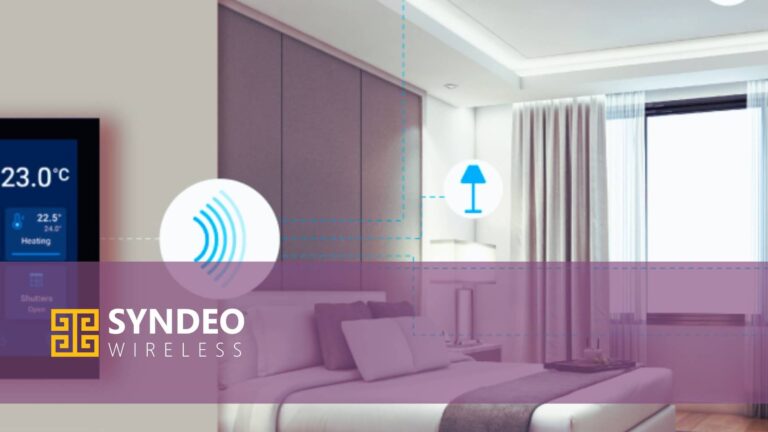
How IoT, access control, smart rooms, and energy management depend on robust wireless infrastructure.
For generations, hospitality has been defined by service. A warm welcome at the front desk, a well-appointed room, attentive staff, and memorable experiences have traditionally been the ingredients of a successful hotel stay. Those fundamentals still matter.
But today’s guests judge a property through a different lens as well one that is increasingly digital.
The modern hotel experience is powered by technology operating quietly in the background. Mobile check-in, digital room keys, personalized room settings, streaming entertainment, smart thermostats, occupancy sensors, connected lighting, security systems, and app-based guest services have become commonplace. Guests may not notice the technology when it works seamlessly, but they certainly notice when it doesn’t.
What many hotel owners and operators are beginning to realize is that smart hospitality doesn’t run on software alone. It runs on connectivity.
A beautifully designed guest app is only as effective as the network supporting it. Digital room keys are useless if guests struggle to authenticate. Occupancy sensors cannot optimize energy usage if they fail to communicate. Connected devices become disconnected experiences when the underlying infrastructure isn’t designed to support them.
The conversation around smart hotels often focuses on the applications themselves. The reality is that the real differentiator lies beneath the surface: the wireless infrastructure that ties everything together.
The New Hotel Technology Stack
Today’s hospitality environments rely on a growing ecosystem of connected systems working in concert.
These often include:
- Mobile check-in and digital room keys
- Guest engagement applications
- Smart thermostats and HVAC controls
- Occupancy and motion sensors
- Connected lighting systems
- Video surveillance and security platforms
- Access control systems
- Staff communications and operations platforms
- Streaming entertainment services
- IoT devices monitoring equipment performance

Individually, these technologies improve efficiency and elevate the guest experience. Collectively, they create a truly intelligent property.
But they also introduce a new level of complexity and dependency. Every additional device, sensor, and application increases the demand placed on the hotel’s wireless ecosystem.
Infrastructure Has Become a Competitive Advantage
For years, connectivity in hotels was viewed primarily as an amenity. Operators asked whether they offered Wi-Fi.
Today’s question is very different: can the property support the growing demands of a connected environment reliably, securely, and at scale?
As guest expectations evolve, hotels are being evaluated on their ability to deliver frictionless experiences. Business travelers expect uninterrupted connectivity throughout guestrooms and meeting spaces. Families expect streaming services to perform flawlessly. Conference organizers expect hundreds of attendees to remain connected simultaneously.
Poor performance doesn’t simply generate complaints. It undermines trust.
The irony is that hotels often invest heavily in front-end technologies while underinvesting in the infrastructure required to support them.
Smarter Buildings, Lower Operating Costs
The value of connected infrastructure extends beyond guest satisfaction.
Smart building technologies can significantly improve operational performance when supported by robust networks.
Hotels can leverage connected systems to:
- Reduce energy consumption through occupancy-based HVAC adjustments
- Optimize lighting schedules and usage patterns
- Monitor critical equipment before failures occur
- Improve housekeeping efficiency
- Enhance security visibility across the property
- Streamline maintenance workflows
- Better understand how guests use shared spaces
In an industry where margins are constantly under pressure, these efficiencies can have meaningful financial impact.
However, none of these benefits materialize if the infrastructure underneath cannot support the flow of data consistently and securely.
Planning for What’s Next
The hospitality industry has always adapted to changing guest expectations. Today’s transformation simply happens to be digital.
The challenge for hotel owners isn’t deciding whether technology will continue to evolve. It will.
The challenge is ensuring the property’s infrastructure is prepared to evolve with it.
Wireless connectivity can no longer be treated as an afterthought or delegated entirely to service providers. It must be planned as part of the building itself designed with sufficient capacity, resiliency, scalability, and flexibility to support both today’s applications and tomorrow’s innovations.
The hotels that thrive over the next decade won’t necessarily be the ones with the most gadgets or the flashiest apps.
They’ll be the ones that recognize an important truth: guests may remember exceptional hospitality.
But increasingly, exceptional hospitality depends on exceptional connectivity. Because smart hotels don’t run on technology alone.
They run on the invisible infrastructure that makes every connected experience possible.